
Six weeks ago, I told you about the power cut that nearly derailed the first session of a new leadership programme.
That cohort finished today. And I’m pleased to report that everything in my office is now plugged into a HUUUUGE battery. The pesky power cuts can do their worst.
At the start of every programme, I tell leaders that I’m far less interested in how their first roleplay goes than in how their last one goes.
That doesn’t always reassure them. People are often a bit anxious about roleplays, and understandably so. Somewhere in the back of their mind is the worry: “Am I about to be found out? I’ve been winging these conversations for years, and if I’m honest, I’ve no idea how to do them properly.”
Honestly, I don’t mind at all if those first conversations are awful. It makes the learning so much more powerful when you can see how far you’ve come.
This group weren’t awful. Far from it. But the improvements were still remarkable.
Around week five, there’s a moment that often happens. One of the leaders finishes a roleplay, everyone who was watching turns their cameras back on, and there’s a spontaneous round of applause. Because what they’ve just watched was pure class. Despite her best efforts, our actress couldn’t trigger them. And she left that conversation feeling heard, trusted, and very clear on what she needed to do moving forward.
After one of the roleplays in this cohort, the leader let out a sigh of relief. “Phew. I was lucky. I didn’t get the difficult version.”
Ahem, there is no difficult version.
Our actress is briefed to respond to how the conversation is handled, exactly as someone would in real life. Handle it badly, and you’ll get the defensiveness, the tears, the “well, what about when YOU…” Handle it well, and you won’t.
She didn’t get lucky. She got good.
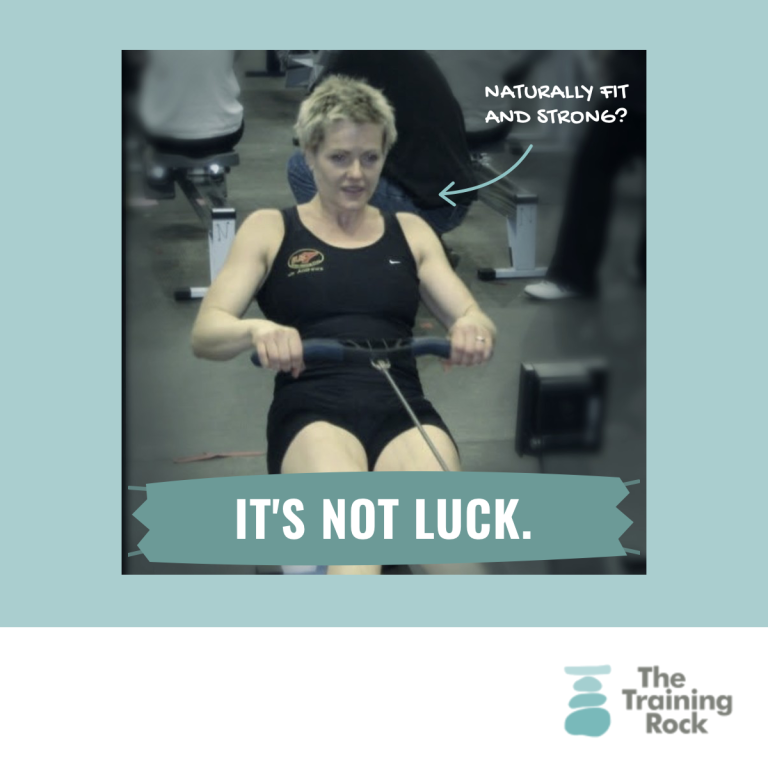
It took me straight back to my rowing days, when I was competing and training five or six times a week. Hard. Strength work, cardio pushing my limits, watching what I ate, prioritising sleep over pretty much everything else. And every so often, someone would say, “Oh, you’re so lucky. You’re naturally fit and strong.”
Ahem.
We call it luck when we can’t see the work.
The leaders in this cohort put the work in. They committed the hours, week after week, to becoming more intentional about how they lead. That’s not luck. That’s a choice.
And I know the hesitation, because I hear it before almost every programme. Four hours a week, for six weeks? Who has that kind of time?
It’s a fair question. But leaders who know how to have tricky conversations get that time back, and then some. They stop quietly doing other people’s work because it feels easier than raising it. They stop going round in circles, rehearsing the conversation in the shower and finding reasons why this week isn’t the right week. They have the conversation, it usually goes better than they feared, and they move on.
Avoiding a difficult conversation doesn’t save you time. It just spreads the cost over months.
And those hours committed to this training aren’t a tick-box exercise. They don’t end when the last session does. They change how you lead from that point on. As one leader from today’s group put it:
“The Training Rock genuinely changed the way I think about leadership. It gave structure to things that I have unconsciously learnt in the past, and identified gaps for me to work on moving forward. Doing this via practical role play means it’s embedded in a way that normal training wouldn’t, and I’m grateful for the opportunity to test out new ideas in a ‘safe to fail’ context.”
Structure for what you half-knew already. Clarity on what to work on next. And somewhere safe to get it wrong before it really matters.
So if you feel lucky that you’ve got a great team who respect you and work hard for you, take some of the credit. For the relationships you’ve built and the conversations you didn’t avoid. Just don’t stop putting the work in. Building a high-trust culture is like pushing a ball up a hill. The moment you take your eye off it, it starts rolling back.
And if you’re feeling unlucky that the culture around you isn’t what you want it to be, it might be time for a mirror check. Not because it’s all your fault. It rarely is. But you’ve almost certainly played a part, and that’s the part you can change.
There’s no difficult version of the actress. Only more and less skilful versions of us.
Rock on,
Jo
P.S. Writing this has left me with nowhere to hide. My fitness didn’t come from luck back then, and it certainly won’t come back by luck now. The trainers are by the door. Wish me luck. (Actually, don’t.)